
Skip to content
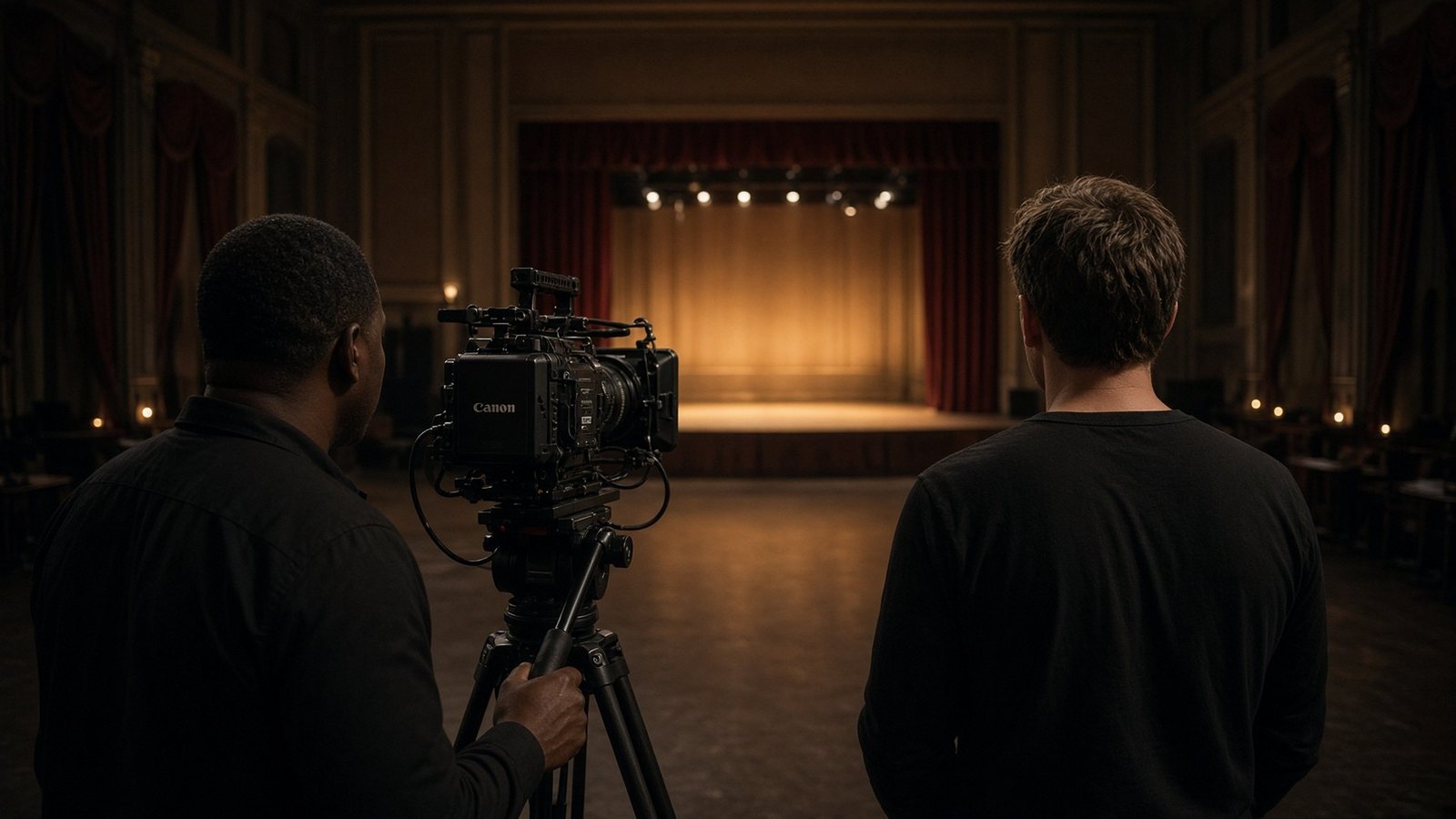
Two people behind a tripod-mounted cinema camera facing a lit theater stage

The moment, carried live.

EOS C400 cameras, a switch, a mix, and a person calling the show. The van, when the room should stay a room.

Samuel Mfinanga · Principal DP · 13+ years live & cinema

Find the right production scope

Capture the day. Or broadcast it live.

Choose the closest scope before the call. Prices are planning references for the listed deliverables, not a reservation or checkout. We confirm the date, crew, travel, usage, revisions and delivery in your written quote.

Event Recap

$2,800 / project

An edited record of the event—not a live stream.

  • Half-day coverage with 2 cameras
  • 60–90 second highlight
  • 2-week delivery target, confirmed in the written scope
Book a call about Event Recap

Conference Day

$6,500 / project

Capture the sessions and tell the story of the day.

  • Full day with 3 cameras
  • Session recordings
  • Recap film; live streaming scoped separately
Book a call about Conference Day

Live Broadcast

$8,500 / project

For an audience watching while the event is happening.

  • Multi-camera live switch and stream
  • Full recording
  • Graphics and lower thirds; venue and connection review
Book a call about Live Broadcast

Need standalone photography? Start an MPM photography inquiry here. An explicit handoff keeps LUCA and MPM customer records separate. You can also explore the studio and its services.

Shape the first conversation

Tell us what this job needs to do.

Answer what you know; every question is optional. Your choices prepare an editable brief on Contact; nothing is sent until you review and submit it there. They do not reserve a date, confirm equipment, produce a price, or promise a result.

Book a call

Continue now, or add a few details first.

Start with the program

The same cameras. Four different live jobs.

Tell us what the audience must experience and what needs to exist when the show ends. The program, venue, signal path, and deliverables determine the production scope.

01

Leadership town hall

Employees in the room and colleagues who must follow the same message remotely.

Bring to the brief
Name the speakers, confidential segments, audience questions, and who can approve the outgoing program.
Decide the outputs
Decide whether the live program, a private recording, and an edited internal replay are separate deliverables.

02

Conference or keynote

Attendees, sponsors, and remote viewers who need more than a fixed camera at the back of the room.

Bring to the brief
Map stage audio, slides, walk-ons, sponsor graphics, room screens, and the destination for the remote audience.
Decide the outputs
Specify the program feed, isolated recordings if needed, and any post-event chapters or highlights.

03

Hybrid panel

People on stage and remote contributors who need to hear, see, and take turns without confusion.

Bring to the brief
Identify who brings each remote speaker in, handles return audio, cues questions, and owns the meeting account.
Decide the outputs
Agree the in-room screen, online program, recording, and caption path before rehearsal.

04

Live program or athletics

Viewers following action as it happens, with a producer responsible for the timing and the record.

Bring to the brief
Plot camera positions, commentary or stage audio, score or title data, venue access, and rights to transmit.
Decide the outputs
Define the live destination, local record, and any separate replay or highlight edit.

Four handoffs to settle before show day.

These are planning questions, not a promise that every service or backup is included. The written scope should name an owner for each handoff.

Destination and authority
Who owns the platform account, viewing permissions, stream key, and final go-live decision?
Venue and signal
Who provides stage feeds, power, network access, and an on-site technical contact for a full-path test?
Failure and record
What backup path is in scope, who invokes it, and where is the local recording checked?
Access and afterlife
Are live captions, a private replay, highlights, or cleared rights needed, and who approves each output?
Book a call

Live

Called, not propped.

The show

  • The venue, the runtime, and where it has to stream
  • Graphics, audio, and the path out
  • The stream while it is live, and the recording after
  • A remote audience designed in, when the room is not the only audience

Live Broadcast & Streaming: the practical distinction

What changes when this work is done here.

A phone on a tripod.

A called show, with a record after.

The workflow

How a live show runs

  1. 01The showThe venue, the runtime, and where it has to stream.
  2. 02The plotEOS C400 cameras, graphics, audio, and the path out. The van, if the venue should stay a room.
  3. 03The liveA switch, a mix, and a person calling the show. Not a phone on a tripod.
  4. 04The recordThe stream while it is live, and the recording after.

Before the quote

Design the show and the signal.

A live audience cannot wait while the room, the cameras, and the stream decide how to work together. The production plan starts with the program and its destination.

  1. 01

    The audience

    Tell us whether this is for people in the room, a remote audience, or both—and where remote viewers must watch.

  2. 02

    The sources

    Map the cameras, stage audio, playback, graphics, and any remote speakers. Agree who supplies each source and who can approve it before showtime.

  3. 03

    The path out

    Venue connectivity, stream destination, recording, and a fallback path are part of scoping. A strong camera picture alone cannot carry a show online.

  4. 04

    After the live moment

    Say whether the recording is the deliverable or whether edited highlights, chapters, or other versions need a separate post-production scope.

What gets scoped

Crew, cameras, switching, audio, graphics, venue access, connectivity responsibilities, and recording are resolved in the production quote. The van is a separate fit decision, not an automatic add-on.

Before you choose

Questions worth settling before you book.

What must be decided before a live production is quoted?
Name the room and remote audiences, program length, camera and audio sources, graphics, remote speakers, stream destination, recording needs, and who controls each feed. The venue's access and network conditions belong in that same conversation.
Who supplies the internet connection and stream account?
That depends on the venue and destination. The plan should name the network owner, upload path, platform account, stream-key custodian, test window, and person authorized to start the broadcast. None should be left as an assumption on show day.
What happens if the primary stream path fails?
Define the fallback path, who switches to it, how viewers will be told, and whether local recording continues. If a backup is in scope, agree a controlled rehearsal of the switchover and check the audience player—not just the encoder. Record the result and unresolved dependencies. A backup plan reduces risk; it is not a promise of uninterrupted service.
Is an edited replay included after the event?
A recording and an edited replay are different deliverables. Specify whether you need the program recording, clean feed, chapters, highlights, captions, or shorter clips, with their review and delivery schedule in the quote.
Why can two quotes for the same event be different?
Compare the work, not just the camera count. Ask each quote to separate planning and rehearsal, load-in and venue access, crew roles and coverage hours, audio and switching, remote presenters, transmission responsibilities, and post-production. Travel, overtime, captions, recording storage, and additional versions should be explicit inclusions, options, or exclusions. Give us the priorities and budget range so the scope can protect what matters without treating every option as necessary.
What should we actually check during the rehearsal?
Walk through representative show cues: a speaker microphone, slides or playback, a camera change, and any remote guest. Check the audience's actual watch page on desktop and mobile, not only the production monitor. Confirm intelligible audio, readable graphics, viewing permissions, and any scoped caption path. Check that a local recording is being written and play back a sample. Name who can approve the go-live decision and what must be resolved first; a test is evidence of that setup, not a guarantee for every show condition.
How do we bring remote presenters into a hybrid event?
Plan the return audio, presentation handoff, connection test, backstage instructions, and a person who can cue each presenter. Agree what the room hears and what online viewers hear so a remote guest is not an afterthought. Send only public event details in the inquiry—never stream keys, account passwords, private meeting links, or attendee lists. Access to production accounts is arranged separately through an agreed secure handoff.
How should we plan the recording and its handoff?
Do not assume the platform replay is the only copy you need. State whether a local program recording or separate feeds are required, then agree formats, the receiving owner, delivery method, access permissions, and retention or deletion dates. Check a sample for picture and audio before accepting the handoff. Public replay, private internal viewing, and an edited campaign cut have different approval and usage needs; storage and future edits are not automatically included.

How we quote

Scope
Quoted per scope

For

Event producers, athletics, conferences needing multi-cam RTMP/SRT livestream — not a phone stream.

Other work in Visual Media & Live Production

Book a call

Tell us what you need done and what success looks like. The contact page also gives you LUCA's direct phone and email.

Book a call